Travel planning has never been more crowded.
A restaurant from Instagram.. a hotel from a TikTok save.. a hidden corner of a city that came out of a stranger’s blog post.. a town a friend insists you can’t miss. Before long, the itinerary has forty-seven entries on it, and the trip stops feeling like yours.
It’s not that any of those sources are bad. It’s that none of them are truly about you.
I work with travelers who arrive at the first conversation already convinced of where they want to go. After a little digging, the destination they think they want is often more a reflection of what’s been circulating in their feed than what would actually move them.
So how to fix it? We start somewhere different, with interest-based trip planning.
Start with What You Find Yourself Reading About
The question I ask in early conversations isn’t “where do you want to go?” Instead, it’s “what do you always find yourself wanting to learn more about?“
The answer is often something surprisingly specific, like traditional crafts, wine, architecture, wildlife, astronomy, the history of a particular era, or the way a region cooks. Sometimes the answer surprises the person who said it out loud.
That fascination, whatever it is, almost always has a destination that does it exceptionally well. Often more than one.
When the trip is built around what genuinely holds your attention, the rest of it arranges itself. Pacing and lodging fall naturally into place, and the day-to-day decisions get easier, because they have something to serve.
When Did a Trip Last Absorb You?
A second useful question. Think back to the moments on past trips where you completely (and wonderfully) lost track of time.
It’s worth doing this exercise honestly. The Mona Lisa has been called the world’s most disappointing masterpiece. Plenty of “must-see” sites appear much differently in person than they do in promotional photos. Popularity is not the same as resonance.
What was the moment that actually pulled you in? Think back to a vineyard tour where you ended up talking with the winemaker for an hour, a small museum nobody mentioned, a walk through a specific neighborhood at the right hour, or the bookstore in a small cathedral town where you stayed an extra day.
Whatever it was, that’s a signal. It tells you something about what your itinerary should hold more of.
What This Looks Like in Practice
A few examples of interest-based trip planning built around a single fixation. Each could anchor a complete itinerary:
Dark Skies and Stargazing: the Atacama Desert, Chile
At over 7,000 feet of elevation, with almost no humidity and almost no light pollution, the Atacama offers some of the clearest skies on earth. Travelers who think about astronomy on long flights tend to find this kind of trip transformative. Plan around the new moon for the darkest viewing.

Traditional Crafts: Kyoto, Japan
Most travelers see Kyoto’s temples and move on. For someone who cares about craftsmanship, it’s a different city entirely. Ceramic studios in the Gojo-zaka district sit a short walk from silk weaving workshops in Nishijin, and lacquerware shops nearby have often been run by the same families for generations. The trip becomes an apprenticeship of sorts.

Food and Culinary Traditions: Bologna, Italy
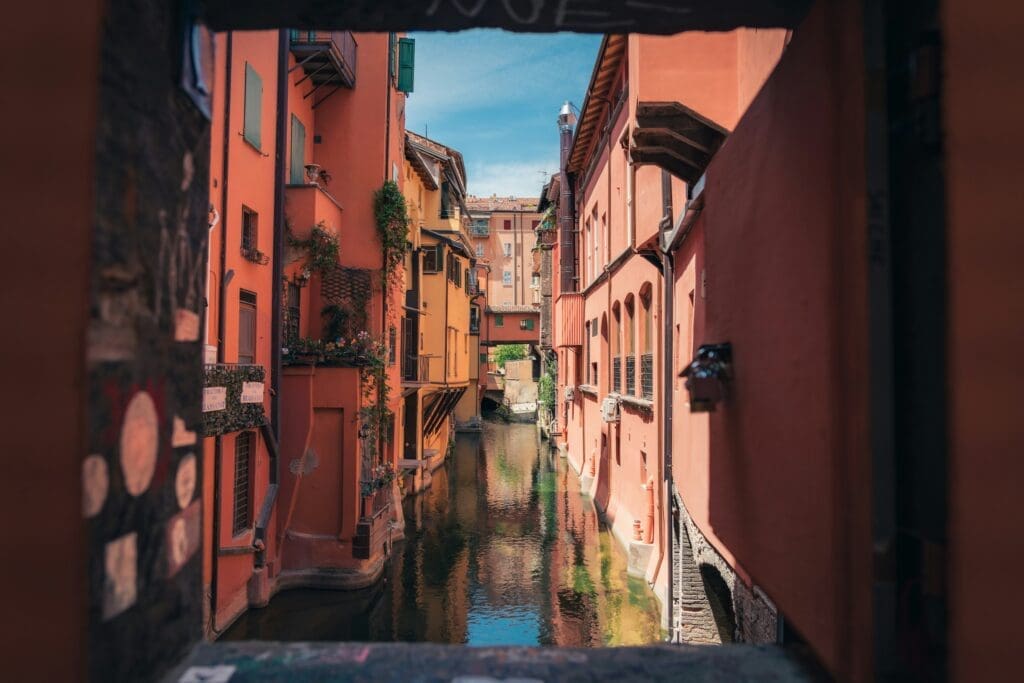
Bologna’s local nickname is la grassa, the fat one. The shorthand is accurate. An itinerary built around fresh pasta, market mornings, and quiet evenings in family-run trattorias is a deeply specific trip. It rewards a traveler who’s actually interested in the process behind a plate, not just the photo.
Nature and Wildlife: the Galápagos, Ecuador
The animals here have no concept of personal space, like sea lions relaxing right on the beach and a blue-footed booby doing its dance three feet from your face. For travelers who care about wildlife, it’s unlike any other destination, because the experience is built around proximity rather than spotting.

Ancient History: a Mediterranean Cruise
For travelers who care about the classical world, a small-ship Mediterranean sailing that puts in at Athens and Ephesus offers more depth than a fly-and-stay trip. Sailing between sites mirrors the way ancient travelers actually moved. Most cruise lines build itineraries around landmarks, while the interest-led version slows down at the ones that matter most to you.

Why This Works
Trips built around an interest tend to outlast the ones built around destinations.
The itinerary has a theme, the pace is set by something real rather than by what’s popular, and the trip ends with the traveler having gone deeper into something they already care about, not collected a series of disconnected photos.
For midlife travelers in particular, who often arrive at a trip with strong instincts about what holds their attention, this approach pays off. You spent years on getaways that other people shaped. The next chapter of how you travel can be built around your own preferences, using interest-based trip planning to create a journey you’ll love.
What I Do With This in a First Conversation
I don’t open with destinations. I open with the question above. What do you find yourself reading about? What absorbed you on a past trip?
The answers shape the rest. Sometimes a client arrives convinced they want Tuscany and leaves the conversation realizing they actually want Hokkaido. Often, they arrive thinking they want a cruise and we land on a small-ship sailing that bears almost no resemblance to what they’d been picturing. Other times, the original destination is exactly right, and the inside of the trip changes completely.
That’s the work. Matching the trip to the traveler, not the other way around.